Who it is for
Dana DJ
DJ. Small clubs, bars, the odd rooftop.
Dana plays the night and owns the sound. Two speaker stacks hang beside the stage, pointed at the floor; the booth is hers; nobody else is coming to tune it. So she does.

A day with Dana
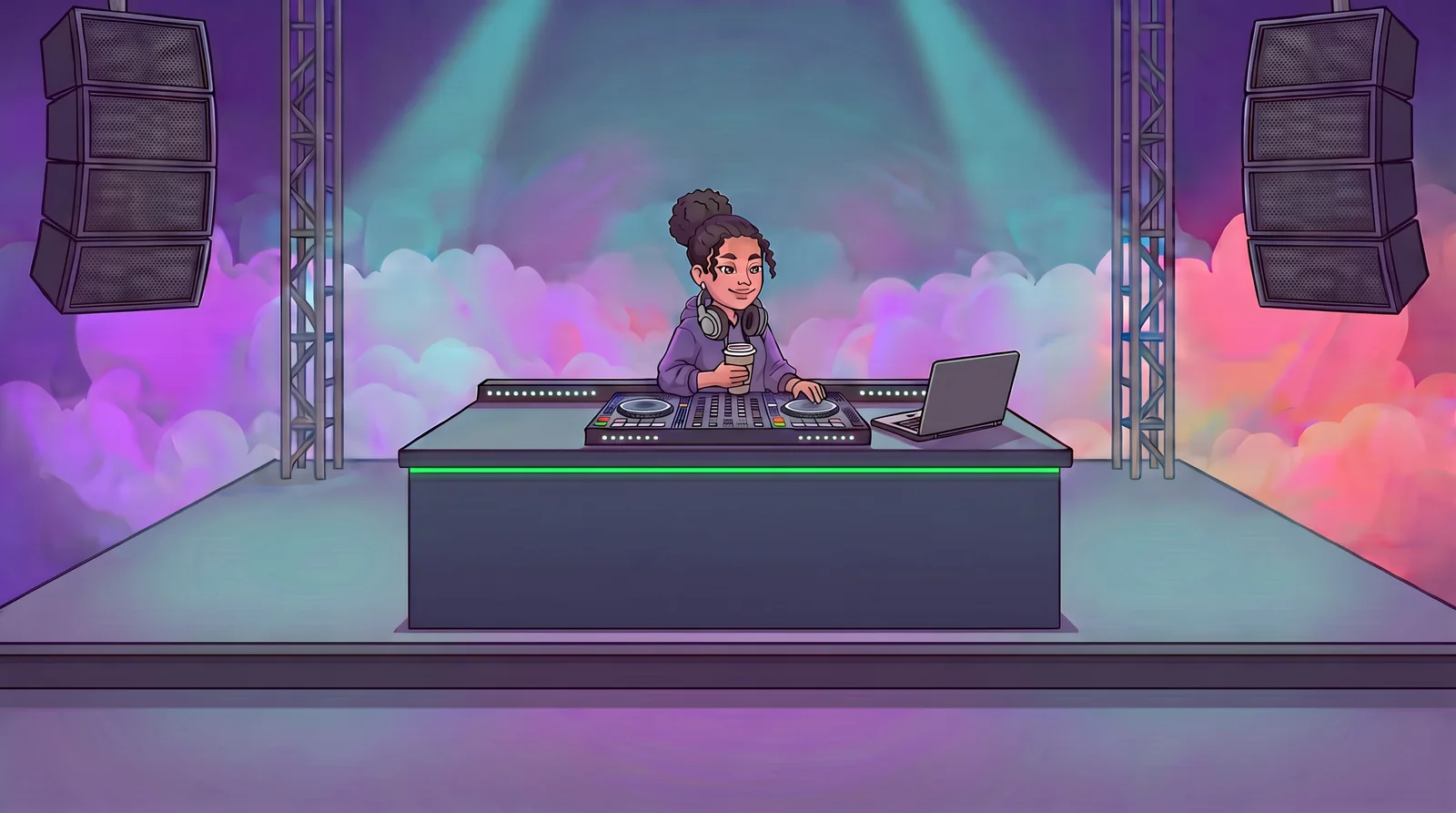
Afternoon
The club is empty. Dana sets a measurement mic on a stand in the middle of the floor and opens AcoustiTrack on the laptop beside her decks. She arms the output and sends pink noise through the stacks.
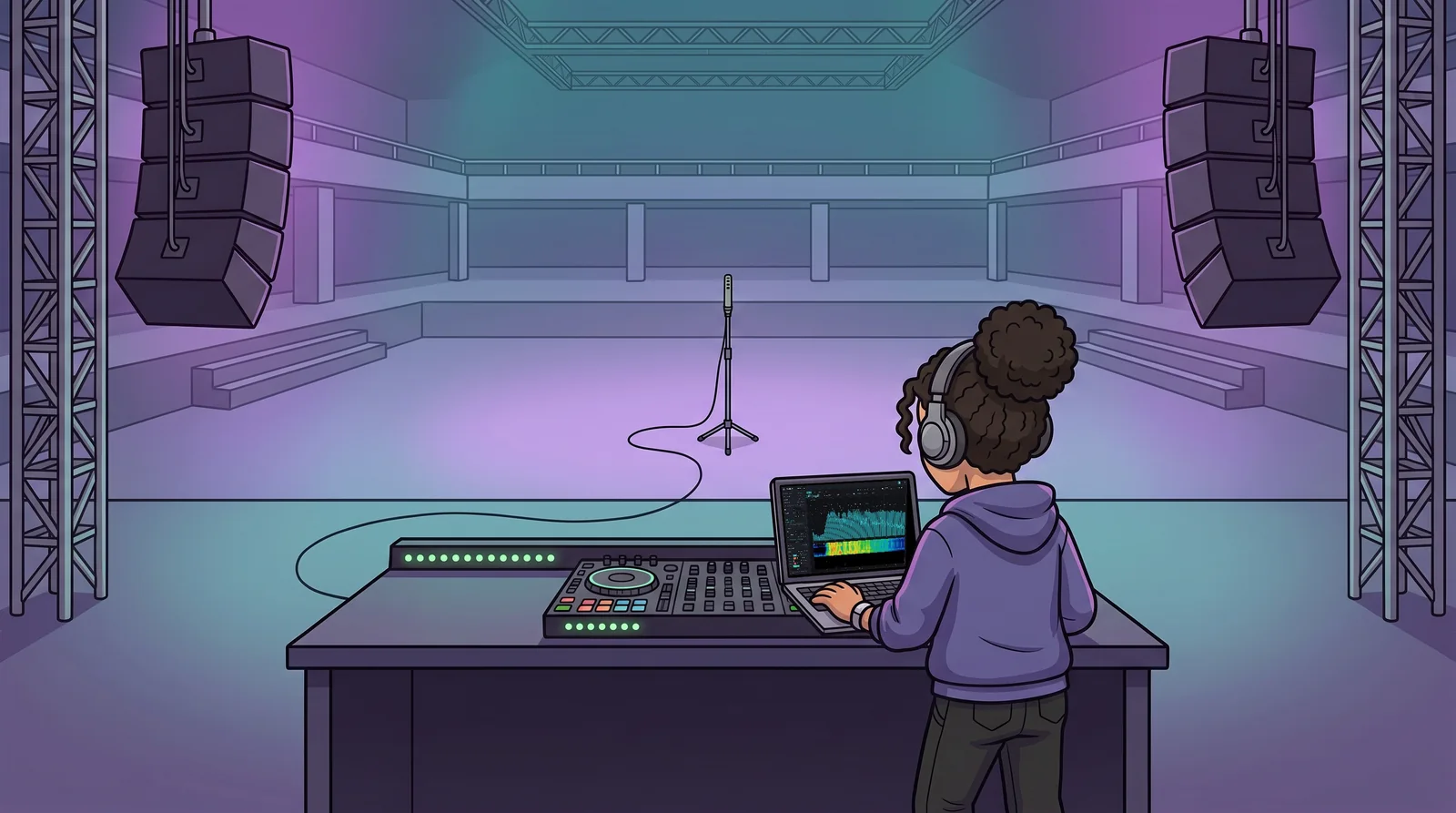
Reading the room
The spectrum shows her where the floor booms and where it thins out. She plays one stack at a time: the transfer function shows each against the signal she sent, and she finds the delay from each to the mic, as an equivalent distance in metres — and whether they arrive together.
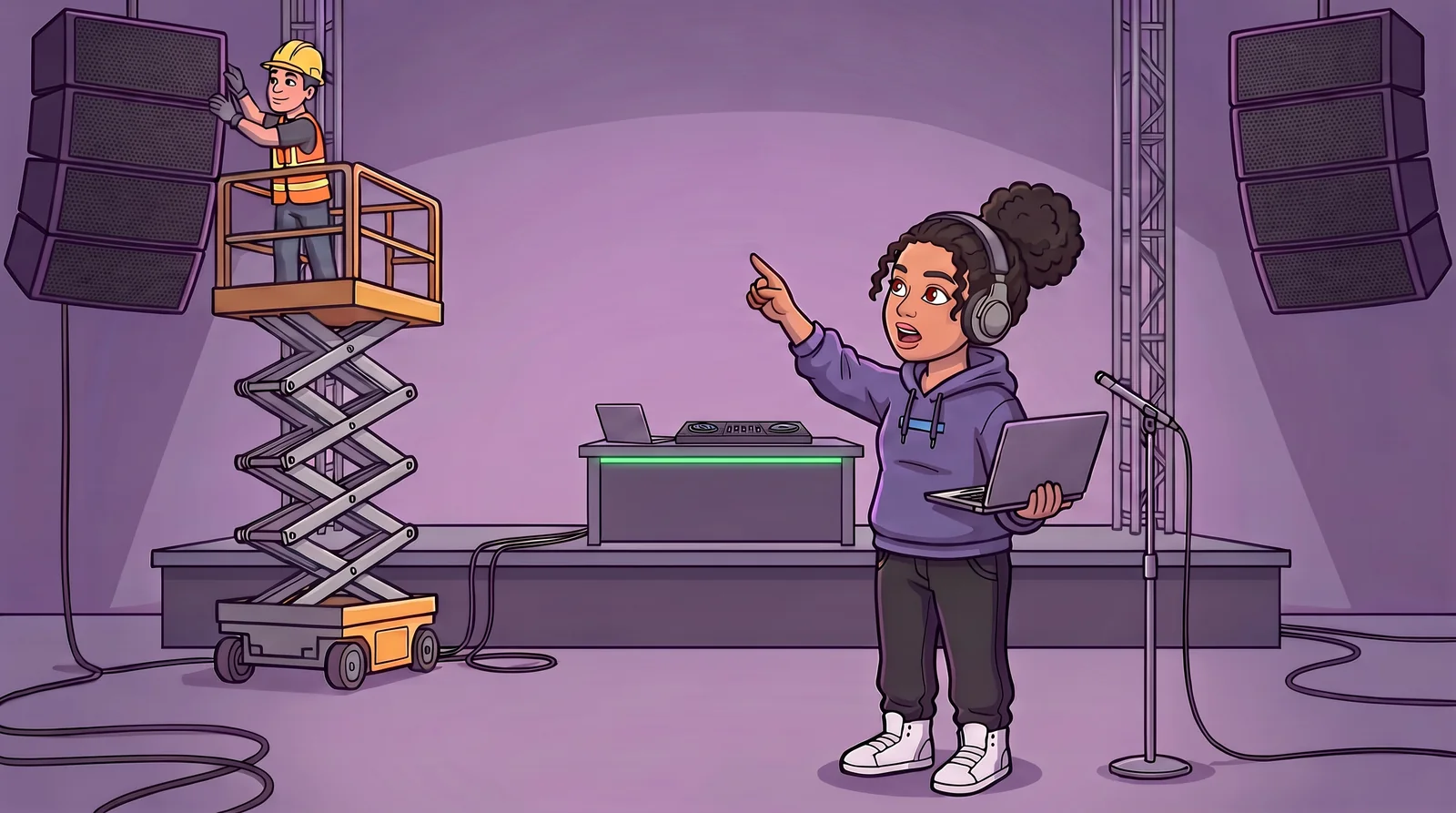
Tilting the speaker
One stack is aimed too high. She tilts it, measures again, and compares the new capture with the old one on the same chart.
The night
The floor fills. Dana keeps the level readout in view — dB(A), with the club’s limit and how much room is left under it. The history logs the night for the owner.
Guided
Dana turns the Guide on. It takes her through the interface and the routing, the test signal and the output, then asks for at least three places on the floor — front, middle and back. From what the places share and what changes between them, it reads where the sound rises and dips compared with the bands beside it: a change at every place is the system's, so EQ will help; one that moves with the microphone is the room's, where moving a speaker or the listening place is the answer. When the places don't settle it, it says so and asks for more.
Dana’s product: AcoustiTrack
The same instrument Fred uses, on her laptop at the booth.